
Most co-owners have talked about growth, hiring, and maybe how they’d eventually sell. Very few have talked through the harder question: what happens to the business the week after one of you dies or becomes permanently disabled?
Without a plan, the answer is usually messy. Your partner’s share passes to a spouse or kids. Now you have a new co-owner who may know nothing about the business, may need cash quickly, and may not want what you want. Meanwhile, their family is depending on an ownership stake they can’t easily sell. Nobody wins.
The Fix: A Funded Buy-Sell Agreement
A buy-sell agreement is a contract between owners that spells out what happens to an owner’s share if they die, become disabled, retire, or leave. It sets the price (or a formula for it), who buys, and when.
The weak spot is almost always the money. An agreement that says “the surviving owner buys the other half for $2 million” doesn’t help much if nobody has $2 million sitting around. That’s where life insurance comes in: each owner is insured, and the policy pays out exactly when the buyout is triggered. The family gets fair value in cash. The surviving owner keeps the business. Payroll still runs on Friday.
A Supreme Court Case Changed the Setup
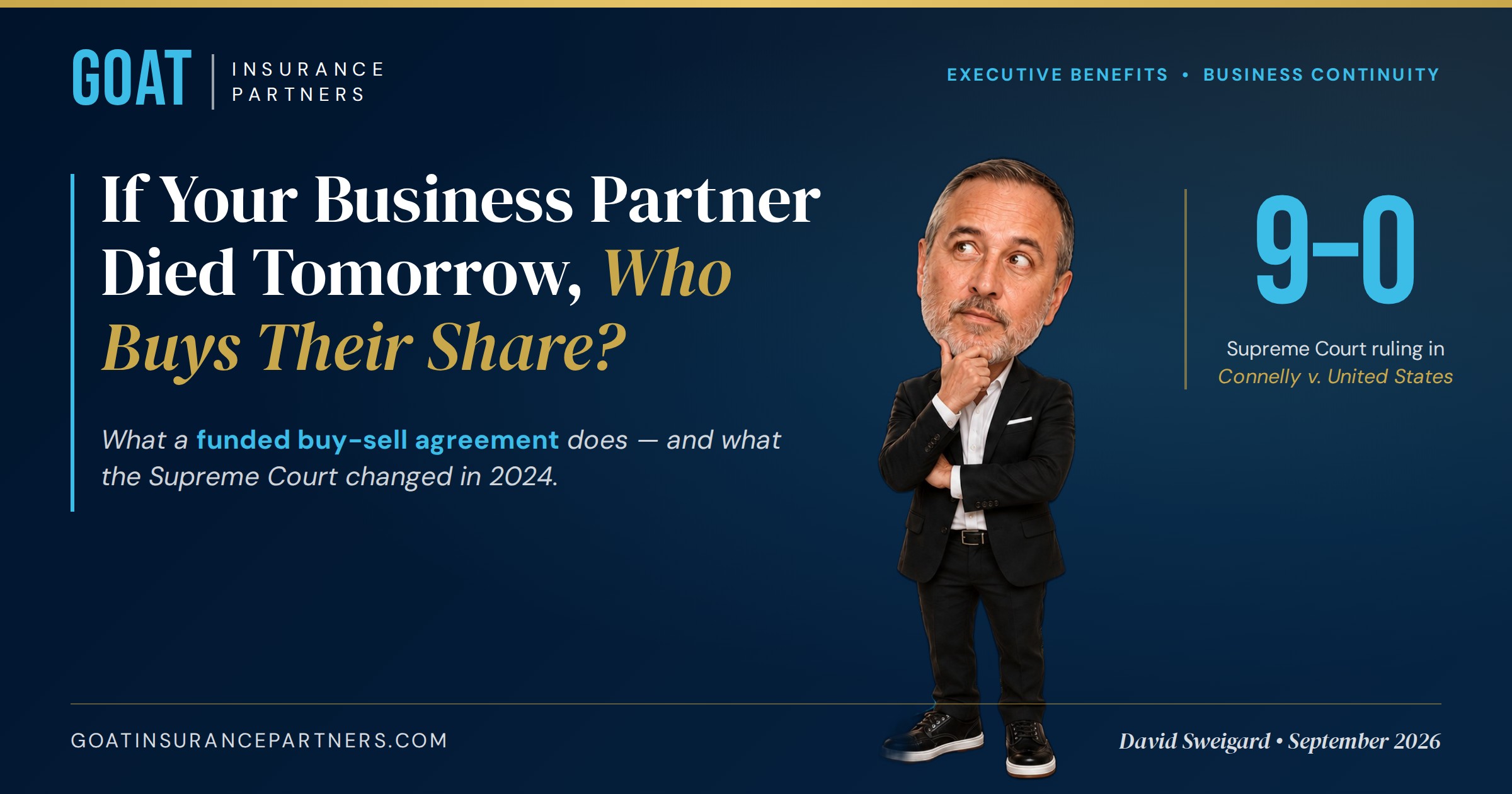
In 2024, the U.S. Supreme Court decided Connelly v. United States. It matters for any company where the business itself owns the life insurance on its owners (an “entity redemption” setup). The Court ruled unanimously that the insurance payout counts as a company asset when valuing the deceased owner’s share, and the company’s obligation to buy those shares back doesn’t offset it.
Translation: the money meant to fund the buyout can inflate the value of the business on paper. For owners with larger estates, that can mean a bigger estate tax bill. The federal exemption is $15 million per person in 2026, so this bites hardest for larger or fast-growing companies, but a distorted valuation can complicate the buyout for any family.
Many advisors now favor a cross-purchase structure, where the owners hold policies on each other and the proceeds stay outside the company. Businesses with several owners sometimes use a separate entity just to hold the policies. The right answer depends on how many owners you have, their ages and health, and how the business is organized.
Three questions to ask this week:
- Do we have a buy-sell agreement at all, and when did anyone last read it?
- Is the price in it still realistic? A valuation from 2015 won’t reflect what you’ve built since.
- Is it fully funded, and who owns the policies: the company or the owners?
If any answer is “I’m not sure,” you’re in good company. It’s the most common answer we hear.
Key Takeaways
- Without a buy-sell agreement, an owner’s death can hand part of your company to heirs who don’t want it, or can’t run it.
- Life insurance is what turns the agreement from a promise into cash on the day it’s needed.
- After Connelly, company-owned policies can inflate a business’s value; cross-purchase setups avoid that.
- Review the price, the funding, and who owns the policies. Most agreements are years out of date.
A Second Set of Eyes
Buy-sell funding is one of the executive benefits we review with Florida business owners, alongside key-person coverage and owner disability income. We work with your attorney and CPA, not in place of them. If you want to know whether your current setup would hold up on the worst day, reach out to GOAT Insurance Partners at david@goatinsurancepartners.com or 904-788-6555.
This article is general information, not tax or legal advice. Consult your attorney and tax advisor before changing a buy-sell agreement or ownership of life insurance policies.